Water Heater Repair in Pittsburgh
Water heater repair for Pittsburgh homes with cold showers, leaks, loud noises, or a pilot that won't light.
Water heater repair for Pittsburgh homes with cold showers, leaks, loud noises, or a pilot that won't light.
Wolf Plumbing handles water heater repair in Pittsburgh, PA for homeowners dealing with no hot water, lukewarm showers, leaks around the tank, or strange noises from the basement. If your water heater has stopped keeping up, call or send a request and describe what you are seeing, and we will work out what needs to be fixed.
Nobody notices a water heater until it quits, and it usually quits at the worst time: a full laundry load, guests in the house, or a cold January morning. Maybe the water runs hot for two minutes and then turns cold. Maybe there is a puddle on the floor, or a rumbling sound every time the burner kicks on. Those are all clues, and most of them point to a specific part or a specific condition inside the tank. Here is how to read them and what the repair usually involves.
Some problems announce themselves loudly. Others creep in over weeks. Watch for these:
If you smell gas, leave the house and call your gas utility from outside before doing anything else. Do not try to relight anything.
The symptom tells you where to start. These are the pairings we see most often.
Gas units add a few extra suspects: the pilot assembly, thermocouple, burner, gas control valve, and venting. Soot, a yellow flame, or a burner that lights and shuts off all deserve a closer look.
Electric units fail in simpler patterns. Heating elements and thermostats wear out individually, so a repair often means replacing one or two inexpensive parts rather than the whole tank.
Homeowners often ask whether it is worth fixing an older tank. This page covers repair: diagnosing the fault and replacing the failed part or fitting. Water heater installation is a separate service we also handle, and it comes into play when repair no longer makes sense.
Repair usually makes sense when the tank itself is sound and the problem is a part such as an element, thermostat, valve, or thermocouple. Replacement becomes the better conversation when the tank is leaking from the shell, when it is badly corroded, or when repairs keep stacking up on an old unit. Check the date on the manufacturer label. Most tanks wear out after roughly a decade or more, depending on water conditions and upkeep. If you are unsure, ask for an honest opinion and the reasoning behind it.
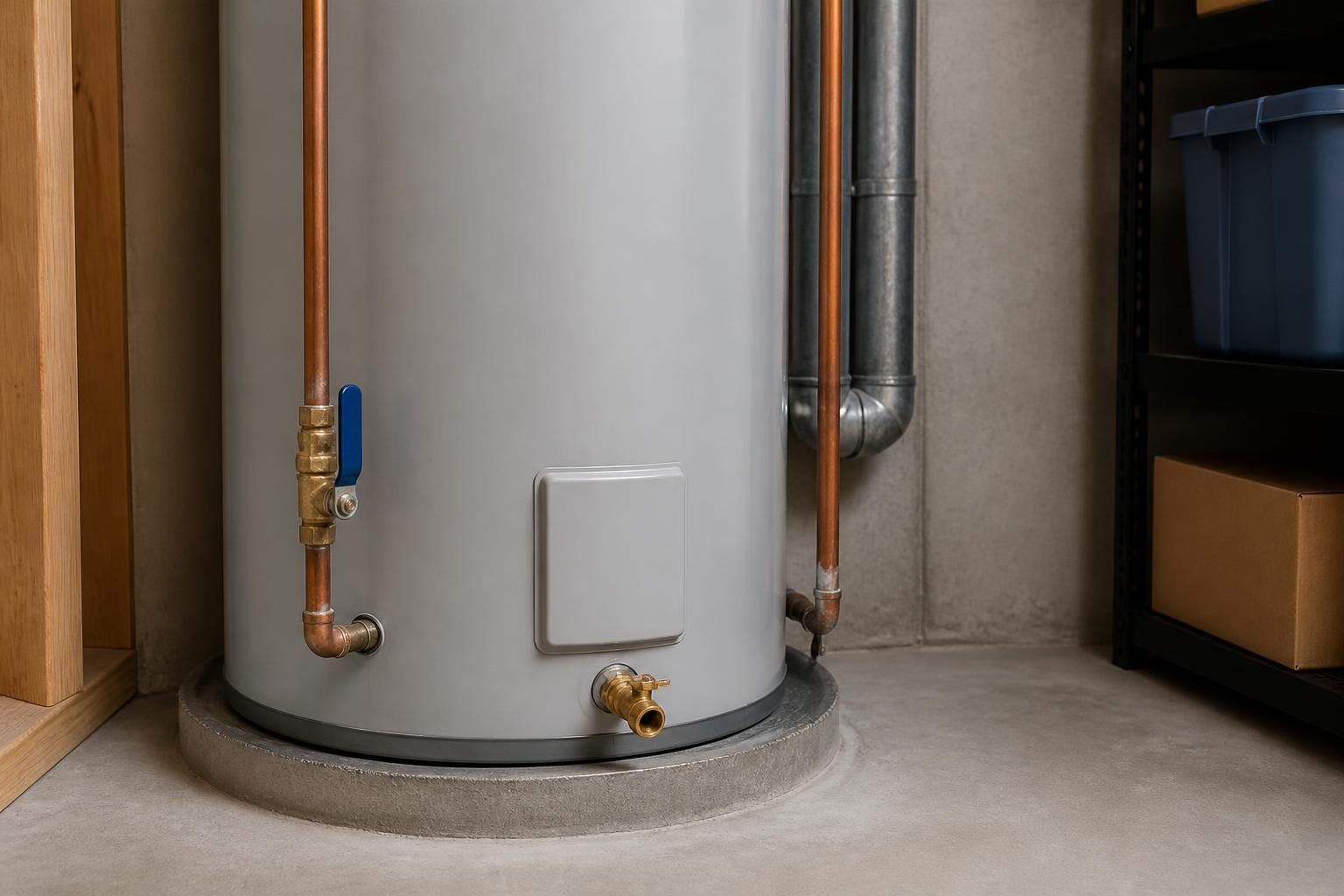
Western Pennsylvania winters are long, and incoming water is typically at its coldest from midwinter into early spring. That makes the heater work harder, so a weak element or a sediment-choked tank tends to show itself during those months. Many homes in the region are older, with water heaters in basements, sometimes tucked into tight utility corners or sitting near floor drains. That setup is worth knowing about because a slow leak can go unnoticed for a while. A quick look at the base of your tank every month or two is a good habit.
A water heater repair visit generally follows a clear order, and you should be able to follow along.
Clearing a path to the heater before we arrive saves time, especially if it sits behind storage in a basement.
Whoever you hire, here are a few standards you can use to judge the work:
Water heater repair costs vary because the jobs vary. These are the real factors:
A clear written quote should spell out the scope of work, the parts included, any extras that could come up, and how changes are handled if the tech finds something unexpected once the unit is opened. If the price might shift, you should hear why before the work continues.
Before you hire anyone for water heater repair in the Pittsburgh area, ask:
Many repairs, such as an element, thermostat, or thermocouple, can be completed in a single visit once the problem is found. Tanks that need a part ordered or have multiple faults can take longer. Heating a full tank back up also takes time after the repair is done.
The price comes from the failed part, the type and size of the unit, how accessible it is, and any extra work needed around it. A written quote from us should lay out each of those pieces so you can see what you are paying for.
Many homeowners flush their tank about once a year, though the right schedule depends on your water and how much sediment builds up. If you hear popping or notice less hot water, it is worth checking sooner.
Usually it is sediment collecting on the bottom of the tank. Water trapped beneath the layer heats up and bubbles through. Flushing can help, but a thick, hardened layer can mean the tank is wearing out.
It depends on where the problem is. A failed part on a tank that is otherwise sound is often worth fixing. A leak from the tank shell, or repeated repairs on an aging unit, usually points toward replacement. We can walk you through both options.
If you see water pooling, shut off the cold water supply to the tank and turn off the power or gas to the unit. Keep the area clear so the technician can get to it easily, and have the make, model, and age of the heater handy if you can find the label.
If your water heater is leaking, running cold, or making noises you do not like, call or send a request to Wolf Plumbing. Tell us what is happening, and we will get you a clear answer and a plan for getting hot water back in your Pittsburgh home.
Start Here
Tell us what is going on with your plumbing and we will help you plan the next step, from a quick repair to a full installation.